Lever Support Bundle
€ 0,00
Additional supplementation support for elevated liver values, fatty liver, hepatitis and liver fibrosis in dogs and cats. Targeting the gut-liver axis, glutathione repair and anti-fibrosis. Silymarin will be added this year as a core support through the NGD Care Vet Pro Line.
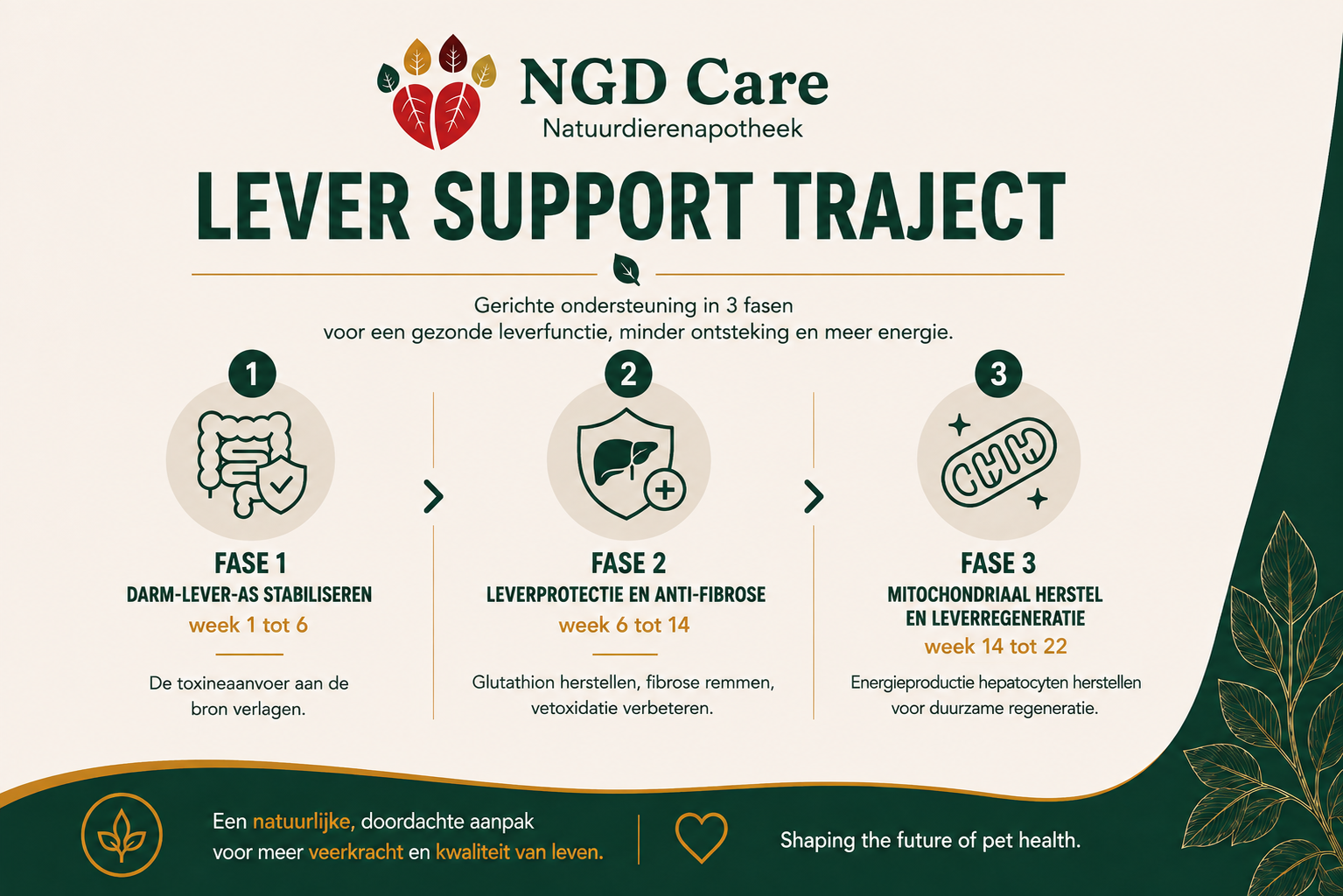
- Three phases: stabilizing the gut-liver axis, inhibiting liver protection and fibrosis, mitochondrial repair
- Liposomal glutathione as the core: the highest glutathione requirement of any organ is in the liver
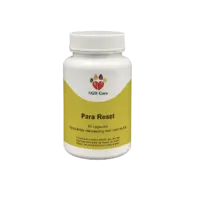
- Para Reset (Berberine + NAC) for AMPK Activation and Fat Oxidation in Fatty Liver
- Curcumin for NF-kB Inhibition and TGF-β1 Inhibition Through Two Complementary Pathways
- Gut-Liver-Axis Approach: Lowering Portal Vein LPS Supply as Primary Liver Intervention
Description
Your animal has received elevated liver values, liver disease or a diagnosis such as fatty liver, hepatitis or liver insufficiency. This bundle has been developed as a supplement to your vet’s treatment. We explain what is really going on in your animal’s liver, what the regular approach lacks and what we recommend to protect the liver tissue and promote recovery.
What your vet told you, and what else is going on
Your veterinarian has measured elevated liver enzymes, possibly made an ultrasound, and prescribed liver-supporting medication. That is justified. But in an average consultation, there is no room to explain why liver disease is so much more than a liver problem, and why the organ that does the most work in the body also deserves the most help with recovery.
What your vet may not have explained
Nutrition for liver disease: what we recommend
In liver disease, a low-protein diet is often recommended to limit ammonia production. From the point of view of integrative medicine, Stefan Veenstra DVM has a nuanced point of view on this.
Our nutritional advice for liver disease
Three mechanisms that drive liver disease
The liver is the primary detoxification organ and produces ROS structurally. In liver disease, ROS production exceeds glutathione capacity, causing hepatocyte damage and DNA damage.
TGF-β1 activates hepatic stellate cells that produce collagen and convert liver parenchyma into scar tissue. Fibrosis is the endpoint of all chronic liver diseases.
LPS from a disrupted intestinal barrier reaches the liver directly through the portal vein and activates Kupffer cells. This is the primary external driver of hepatic inflammation and fibrosis.
Our advice: phased support in addition to the care of your veterinarian
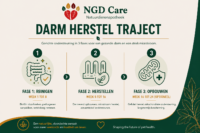
The phasing is mechanistically: first stabilize the gut-liver axis and reduce the toxin supply, then actively protect the liver and inhibit fibrosis, then restore the mitochondria for sustainable liver regeneration.
The portal vein connects the intestine directly to the liver. Everything that is absorbed in the intestine, including LPS from a disturbed intestinal barrier, reaches the liver first. Prebiotics reduce LPS-producing dysbiosis. Enzyme mix 2 improves digestion so that undigested proteins in the colon ferment less into ammonia. Liposomal curcumin inhibits NF-kB and TGF-β1, thereby addressing two of the three central fibrosis drivers simultaneously. Vitamin C as a cofactor for glutathione synthesis and phase I detoxification enzymes.
Liposomal glutathione is the core of phase 2. The liver has the highest glutathione requirement of any organ. Glutathione neutralizes ROS, is essential for phase II detoxification via glutathione-S-transferase and protects hepatocytes from toxic damage. Para Reset delivers the glutathione precursor cysteine for endogenous supplementation via NAC, and AMPK activation via berberine that stimulates fat oxidation in hepatocytes and inhibits lipid accumulation in fatty liver disease. Omega-3 modulates Kupffer cell macrophage balance and lowers hepatic TNF-alpha and IL-6 production.
* Silymarin (milk thistle) is the best-researched hepatoprotective supplement available. It will be added to the NGD Care range this year and will then be part of phase 2 as a core support.
Liver regeneration is an energy-consuming process. Hepatocytes that create new liver parenchyma need a high mitochondrial capacity. Longevity Support restores sirtuin activity and mitochondrial biogenesis through NAD⁺. SIRT1 and SIRT3 activation additionally improves liver fat oxidation via PGC-1alpha and decreases hepatic lipid accumulation. CoQ10 restores the electron transport chain and is structurally reduced in chronic liver disease due to oxidative depletion.
What can you expect and when?
The liver is the only organ with the ability to regenerate, but recovery takes time. Check liver enzymes (ALT, AST, ALP, GGT) every 6 to 8 weeks with the veterinarian to objectively monitor progress.
Intestine stabilized. Toxin supply at source reduced. Reduced systemic LPS burden on the liver.
Glutathione restored. Fibrosis slowed down. Possible improvement in liver enzymes visible when controlled.
Mitochondrial repair. More vitality, better appetite, coat improves. Liver regeneration underway.
Liver enzymes stabilized or normalized. Maintenance with glutathione, curcumin and prebiotics.
Check liver enzymes every 6 to 8 weeks. In case of liver cirrhosis, portosystemic shunt or liver insufficiency, always schedule a personal consultation for tailor-made advice. Some supplements require dose adjustment in case of reduced liver detoxification capacity.
In addition to specific complaints
Increased bilirubin and bile acid accumulation cause nausea through the central nervous system. CBD oil modulates the endocannabinoid system and has an antiemetic effect without liver strain.
Fluid leakage occurs with reduced albumin production by the liver. Always veterinary guidance. Dandelion as a supportive diuretic herbal support in addition to medication.
Cholestasis leads to bile acid accumulation in the skin with severe itching. PEA & Boswellia inhibits neuroinflammation and mast cell activation that increase itching.
Decreased glycogen storage and metabolic hepatic insufficiency cause chronic fatigue. Liposomal vitamin B complex replenishes the B vitamins that the liver normally stores and converts.
In severe hepatic impairment, some supplements may require an adjusted dosage because the liver metabolizes them. When in doubt, always schedule a personal consultation for tailor-made advice.
For which situations do we recommend this bundle?
Want to read the full scientific background?
Stefan Veenstra DVM explains how the gut-liver axis, oxidative stress, TGF-β1-fibrosis and silymarin are related to liver disease in dogs and cats.
All supplements in this bundle
Developed and clinically substantiated by Stefan Veenstra DVM, integrative veterinarian of Natural Healthy Animals and founder of NGD Care. For personal guidance: NGD Care consultation →
This bundle is educational in nature and does not replace a veterinary consultation. The Liver Support Bundle is intended as a supplement to regular veterinary treatment, never as a replacement. In case of liver cirrhosis, portosystemic shunt or severe liver insufficiency, always schedule a personal consultation. Some supplements require dose adjustment in case of reduced liver detoxification capacity.
Ingredients, dosage and use
- See the individual ingredients
- For the first month, we recommend a double therapeutic dose of 2x daily. Then a maintenance dose of 1x daily.
- Each phase is suitable for a treatment of 2-4 months for a dog or cat <10kg and for 1-2 months for a dog of 10-30kg.
Disclaimer
- This product is a dietary supplement and not a substitute for a healthy lifestyle and varied balanced diet.
- The products are not medicines and cannot be used as medicines, but as a dietary supplement. In case of illness or other medical condition, always consult a veterinarian before use.
- Dietary supplements may have interactions and side effects with regular medications.
- Keep out of reach of young children.
- Consult an expert before using supplements in case of pregnancy, lactation, medication use and illness.