

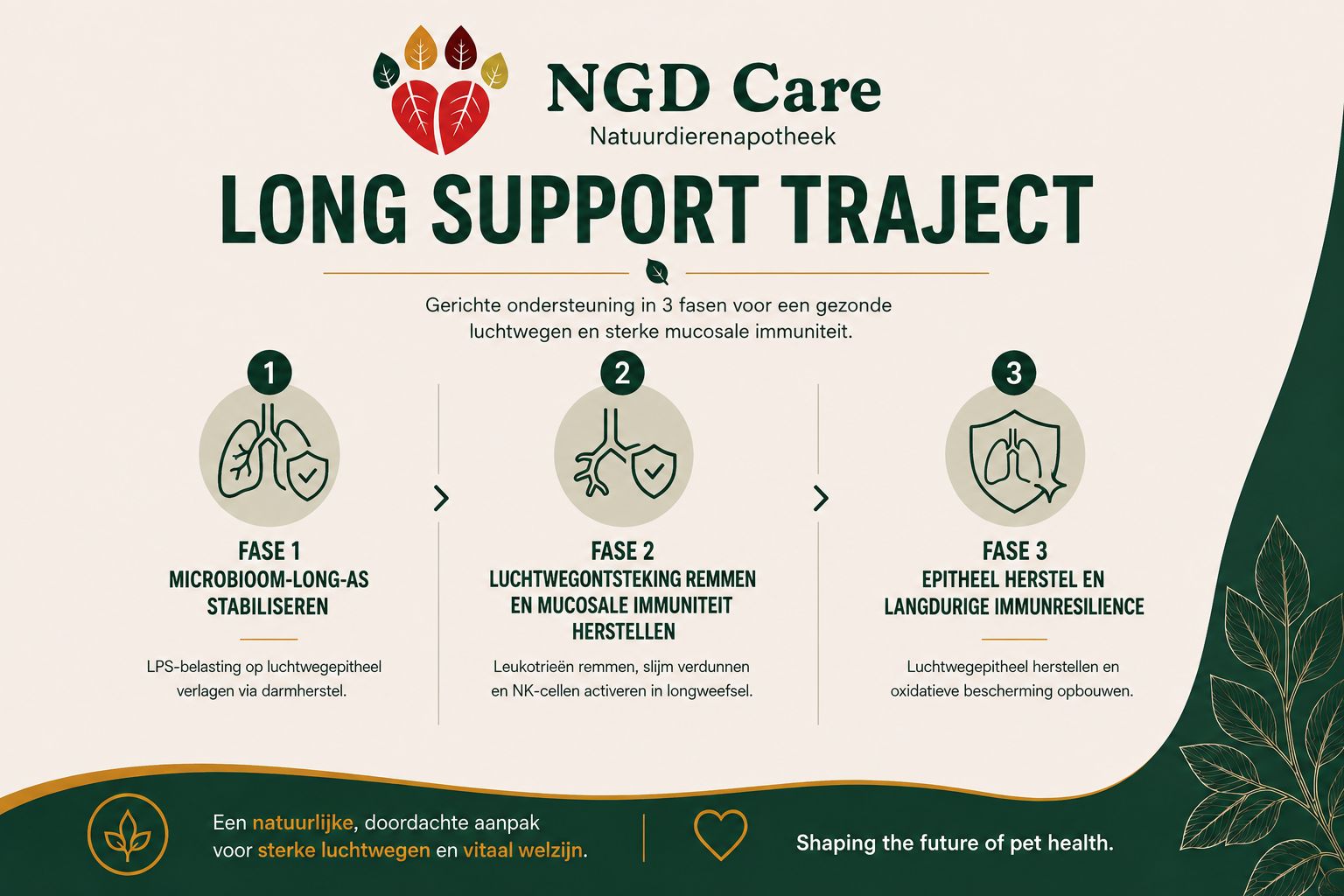
Long Support Trajectory
€ 144,85
Additional supplementation support for asthma in the cat, chronic bronchitis in the dog, recurrent respiratory infections, and kennel cough after-effects. Targeting the microbiome-lung axis, leukotriene inhibition, mucus thinning, and mucosal immune function. Always complementary to veterinary treatment. Not applicable for lung tumor: see Oncology Support Bundle.
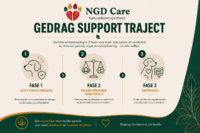
- Three phases: stabilize microbiome-lung axis, inhibit airway inflammation and restore mucosal immunity, restore epithelium
- PEA & Boswellia for 5-LOX inhibition: lowering leukotriene B4 and D4 without broad immune suppression
- NAC via Para Reset for Mucus Thinning via Disulfide Bridge Interruption in Mucus Glycoproteins
- Myco Immune Complex for NK cell activation and IgA stimulation in lung tissue
- Microbiome-lung-axis approach: butyrate via gut repair directly modulates alveolar macrophages
Description
Your animal has chronic coughing, shortness of breath, recurring respiratory infections or has been diagnosed with bronchitis or asthma. This bundle has been developed as a supplement to your vet’s treatment. We explain what is mechanistic in the airways, why respiratory diseases are a systemic problem and what we recommend in addition to regular care.
What your vet told you, and what else is going on
Your vet may have prescribed antibiotics, a bronchodilator, or corticosteroids for asthma. That is justified with the right indication. But chronic respiratory disease is rarely just a local problem in the lungs. They result from impaired mucosal immune function, chronic inflammation, and a microbiome-lung axis that is rarely recognized as such.
What your vet may not have explained
Nutrition for respiratory diseases
Our nutritional advice for respiratory problems
Three mechanisms that drive respiratory disease
Secretory IgA is the primary immunological barrier in the respiratory tract. Microbiome-dependent IgA production is reduced in dysbiosis, causing recurrent infections.
5-lipoxygenase metabolizes arachidonic acid to leukotriene B4 and D4 which cause bronchoconstriction, mucus hyperproduction, and mast cell activation. The core of asthma in cats.
Gut dysbiosis increases systemic LPS burden. LPS activates TLR4 on airway epithelium and alveolar macrophages, which induces NF-kB activation and pro-inflammatory cytokine production that maintains chronic airway inflammation.
Our advice: phased support in addition to the care of your veterinarian
The phasing is mechanistically determined: first stabilize the intestine and systemic LPS load, then directly support airway inflammation and mucosal immune function, then build the recovery capacity of the airway epithelium.
The gut-lung connection runs through the systemic circulation. LPS from a disturbed intestinal barrier reaches the lung capillaries via the blood and activates alveolar macrophages via TLR4. This maintains a chronic pro-inflammatory state in the respiratory tract that persists even after elimination of the initial infectious agent. Prebiotics restore the microbiome balance and reduce LPS-producing dysbiosis. Vitamin C supports IgA production in mucosal cells and protects the airway epithelium. Curcumin inhibits NF-kB in alveolar macrophages.
PEA & Boswellia inhibit the production of leukotriene B4 and D4 that cause bronchoconstriction and mucus hyperproduction via PPAR-alpha and 5-lipoxygenase. This is the mechanistic alternative to corticosteroids in chronic inflammation, without the side effects of immune suppression. Histamine Balance (MSM and quercetin) intervenes in a third, complementary pathway: quercetin stabilizes mast cells by blocking the calcium influx needed for histamine release, even before PEA has to take action. Especially relevant for a highly allergic, histamine-driven component such as asthma in cats. Myco Immune Complex activates NK cells and alveolar macrophages via beta-glucans for enhanced mucosal immune response. NAC via Para Reset thins mucus by breaking disulfide bridges in mucus glycoproteins and increases glutathione in airway epithelium. Omega-3 modulates the eicosanoid balance towards anti-inflammatory resolvins that actively resolve airway inflammation.
* In case of asthma in cats: Do not combine Para Reset with bronchodilators without consulting a veterinarian. The AMPK-activating action of berberine can affect bronchial smooth muscle tone.
Chronic airway inflammation structurally damages the airway epithelium via oxidative stress and proteolytic enzyme activity. Longevity Support restores mitochondrial biogenesis in airway epithelium and alveolar cells via NAD⁺. Liposomal glutathione is the primary antioxidant in the lung and protects type II pneumocytes that produce surfactant. Lactoferrin supports mucosal immunity via dendritic cell maturation and inhibits airway biofilm via iron sequestration.
What can you expect and when?
Intestine stabilized. Reduced systemic LPS load. Mucus is slightly less chewy noticeable.
Leukotriene inhibition active. Less cough frequency. Less shortness of breath. Better load capacity.
Epithelial recovery visible. Fewer recurrent infections. Better general condition.
Immune resilience built. Less infection pressure. Stable airway function in addition to medication.
In case of asthma in cats, always continue the medication from the vet. The bundle is supplementary to bronchodilators and corticosteroids, never as a replacement. In case of lung tumor or lung metastases: see the Oncology Support Trajectory.
Specific points of attention for each condition
Mast cell activation and leukotriene B4/D4 as primary mediators. PEA & Boswellia address both routes. Stress as a well-known trigger via HPA axis activation: Myco Adaptogen Complex as a supplement for stress-sensitive cats.
Goblet cell hyperplasia and impaired mucociliary clearance as a structural problem. NAC via Para Reset for mucus dilution is the most direct supplement here. Omega-3 for goblete cell inhibition via leukotriene suppression.
Reduced mucosal IgA as an underlying problem. Myco Immune Complex and lactoferrin as a core intervention for mucosal immune function. Bowel repair via phase 1 as the basis for IgA repair.
Prolonged coughing after Bordetella infection due to damaged airway epithelium and decreased mucociliary clearance. Vitamin C and glutathione for epithelial repair. Lactoferrin for biofilm inhibition of residual bacteria.
For which situations do we recommend this bundle?
In case of lung tumor, lung metastases or severe pneumonia, always schedule a personal consultation. For oncological lung diseases, we refer to the Oncology Support Trajectory.
Want to read the full scientific background?
Stefan Veenstra DVM explains how the microbiome-lung axis, leukotriene mediators and mucosal immune function are related in respiratory diseases in dogs and cats.
All supplements in this bundle
Developed and clinically substantiated by Stefan Veenstra DVM, integrative veterinarian of Natural Healthy Animals and founder of NGD Care. For personal guidance: NGD Care consultation →
This bundle is educational in nature and does not replace a veterinary consultation. The Long Support Trajectory is intended as a supplement to regular veterinary treatment, never as a replacement. In case of asthma in cats: never stop taking bronchodilators or corticosteroids on your own. If lung tumor is suspected, always refer to oncology.
Ingredients, dosage and use
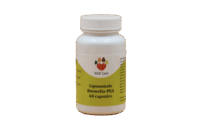
- See the individual ingredients
- For the first month, we recommend a double therapeutic dose of 2x daily. Then a maintenance dose of 1x daily.
- Each phase is suitable for a treatment of 2-4 months for a dog or cat <10kg and for 1-2 months for a dog of 10-30kg.
Disclaimer
- This product is a dietary supplement and not a substitute for a healthy lifestyle and varied balanced diet.
- The products are not medicines and cannot be used as medicines, but as a dietary supplement. In case of illness or other medical condition, always consult a veterinarian before use.
- Dietary supplements may have interactions and side effects with regular medications.
- Keep out of reach of young children.
- Consult an expert before using supplements in case of pregnancy, lactation, medication use and illness.