


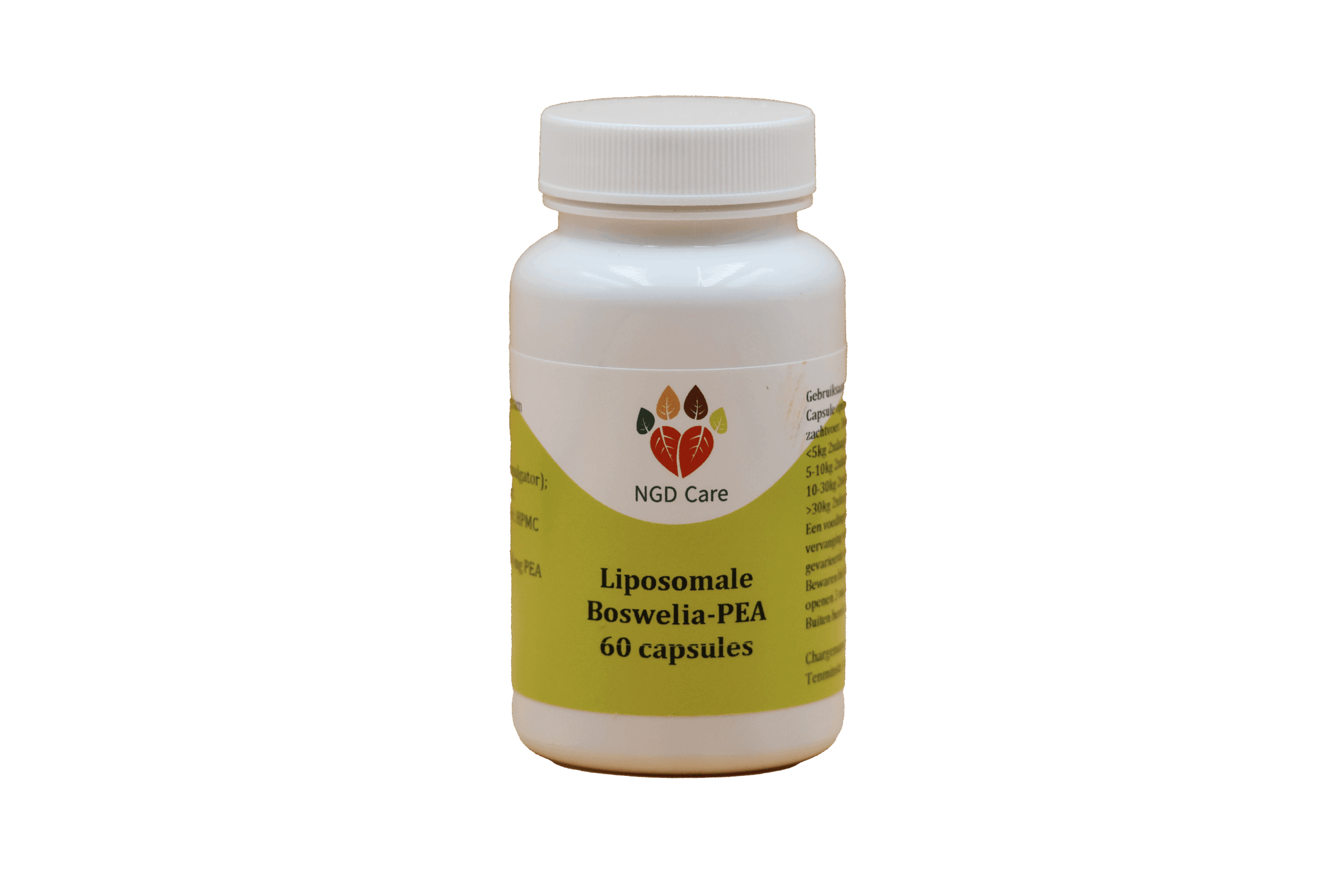
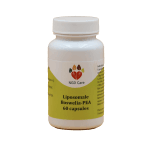
Liposomal PEA complex
€ 44,95
PEA Complex is the new name of PEA & Boswellia. Long-term joint pain, skin inflammation or abdominal complaints in your dog or cat? PEA is a substance that the body produces itself for pain and inflammation, but it falls short for chronic complaints. This supplement supports in a natural way, without the side effects of long-term use of regular painkillers.
- Natural support for chronic pain, inflammation and osteoarthritis
- Helps with nerve pain, glaucoma, arthritis and intestinal complaints
- Has an anti-inflammatory and neuroprotective effect
- Liposomal delivery for better absorption
- Safe alternative or supplement to regular medication
- Description
- Ingredients
- Dosage and use
- Disclaimer
- Scientific literature & substantiation
- Reviews (0)
Description
QUICK SUMMARY
This supplement helps with: long-term joint pain, skin inflammation, intestinal complaints and nerve pain in dogs and cats. A natural alternative without the side effects of long-term NSAID use.
How does PEA Complex work?
PEA (palmitoylethanolamide) is a substance that the body produces itself in case of pain and inflammation. It acts as an endogenous pain-regulating molecule that inhibits mast cells, modulates nerve conduction, and dampens inflammatory processes at the cellular level via the PPAR-alpha receptor. In the case of chronic complaints, the patient’s own production is inadequate, making supplementation useful.
Boswellia serrata, the second ingredient, inhibits a specific inflammatory enzyme (5-LOX) that plays a central role in chronic joint and intestinal inflammation. Where PEA works through cellular pathways, boswellia targets a biochemical branch of inflammation. Together, they give broader pain modulation than each individually.
The big advantage over NSAIDs: PEA and boswellia do not or hardly inhibit the COX pathway, which means that the gastrointestinal and renal side effects that are a real problem with long-term NSAID use do not or hardly occur here.
What does this supplement do?
- Helps with long-term joint pain and stiffness
- Supports skin inflammation and chronic itching
- Helps with abdominal complaints and intestinal inflammation
- Natural alternative without side effects of long-term NSAID use
- Suitable for dogs, cats and humans with chronic pain
- Suitable for neuropathic pain
When do you see results?
PEA acts as a body’s own regulating molecule. From a systems biology point of view, it repairs a deficit that has been built up gradually. The first effects are noticeable as soon as the system is sufficiently replenished. Boswellia enhances this effect through a complementary route.
PEA begins to inhibit mast cell activity and modulate nerve conduction. Boswellia inhibits 5-LOX. First reduction in acute pain peaks noticeable.
Significantly less pain when moving. Less stiffness after rest. Less itching and redness noticeable in skin complaints.
Significantly better mobility and comfort. In case of intestinal complaints, calmer intestine. Less dependence on painkillers possible in consultation with veterinarian.
Daily use structurally maintains pain and inflammation modulation. For osteoarthritis and chronic pain, a long-term supplement.
Don’t see any difference after 6 weeks? Contact us via our app or email, or schedule an intake with integrative veterinarian Stefan Veenstra.
Frequently Asked Questions (FAQ)
What is the difference between PEA and CBD?
Both work on the endocannabinoid system, but through different routes. CBD directly inhibits the enzyme FAAH, leaving more anandamide available. PEA works via the PPAR-alpha receptor and also inhibits mast cells directly. They reinforce each other when used together.
Can I combine PEA Complex with an NSAID prescribed by my veterinarian?
In many cases, yes, because PEA and boswellia do not work via the COX route and therefore appeal to a different mechanism than NSAIDs. Always discuss this with the attending veterinarian, especially if the goal is to reduce the NSAID dosage in the long term.
Is PEA Complex also suitable for nerve pain?
Yes. PEA modulates nerve conduction and is being investigated in the human and veterinary literature in neuropathic pain. This makes it relevant in addition to joint and intestinal complaints for pain that is controlled by the nervous system.
Why does PEA Complex also contain boswellia instead of just PEA?
PEA works through cellular pathways like PPAR-alpha and mast cell inhibition. Boswellia also inhibits the enzyme 5-LOX, a biochemical inflammatory pathway that PEA does not address. The combination therefore gives a broader spectrum of action than PEA alone.
Why NGD Care PEA Complex?
| Characteristic | NGD Care | Medium supplement |
|---|---|---|
| Mechanism | PEA via PPAR-alpha + boswellia via 5-LOX: two complementary pathways | Often a single ingredient |
| Safety long-term use | ✅ Safe no COX inhibition, no stomach or kidney strain | NSAIDs: stomach and kidney strain with long-term use |
| Form of | Liposomal capsule with only active ingredients | Tablet or chew: often with fillers |
| Unique synergistic formulation | ✅ Yes PEA plus boswellia for broad pain and inflammation modulation | ❌ Single PEA without synergy |
| Scientifically substantiated | ✅ Yes RCT 2026 in Dogs and Cats with Joint Pain | Variable, rarely veterinary RCT |
| Human Grade quality | ✅ | Often not |
| Clean & Green Label | ✅ Yes, free from synthetic additives | Rarely |
| Part of systemic protocol | ✅ Yes core component Joint Protocol and Skin Protocol | ❌ Individual supplements |
| Developed by veterinarian | ✅ Stefan Veenstra DVM | Rarely |
| Personal guidance | ✅ Intake possible via Naturally Healthy Animals | ❌ Not available |
Comparison based on common pain and inflammatory supplements for dogs and cats on the Dutch market.
Part of a protocol
PEA Complex is a core component of the Joint Protocol as a pain and inflammation modulator, and part of the Skin Protocol and Intracellular Microbe Protocol.
Works well with
PEA and boswellia modulate pain and inflammation. The supplements below enhance this through additional mechanisms.
Omega-3 inhibits COX, PEA inhibits via PPAR-alpha, boswellia via 5-LOX. Three different inflammatory pathways at the same time: the most complete natural anti-inflammatory system available for joint problems.
PEA and CBD work synergistically through the endocannabinoid system. PEA indirectly inhibits FAAH, CBD inhibits it directly. Together, they increase anandamide levels and significantly enhance each other’s pain and anxiety effects.
PEA modulates pain and inflammation, Mobility Support provides the structural building blocks for cartilage and joints. Together the complete package for osteoarthritis: less pain and recovery of the joint structure.
Curcumin inhibits NF-kB, PEA inhibits via PPAR-alpha. Complementary inflammatory pathways that do not overlap. In chronic joint or intestinal inflammation, a mechanistically strong combination.
Want to know more about the science behind this supplement?
Stefan Veenstra DVM explains how PEA works as a body’s own pain-regulating molecule and why the combination with boswellia is unique.
Developed and clinically substantiated by Stefan Veenstra DVM, integrative veterinarian. Stefan is the founder of NGD Care, NGD Care Academy and Integrative Veterinary Center Natural Healthy Animals. Read more about Stefan →
This information is educational in nature and does not replace a veterinary consultation. In case of severe or persistent complaints, always consult a veterinarian.
Ingredients
- Ingredients
- Palmitoylethanolamide, Boswellia Serrata
- Composition per capsule of 400mg
- 150mg Boswellia serrata
- 150mg Palmitoylethanolamide (PEA)
- Additions
- Lipodry liposome: sunflower lecithin
- HPMC vega capsule
Dosage and use
- Dosage dog and cat
- Therapeutic dosage
- on the advice of a veterinarian or therapist
- <10kg 2xdaily 1/2 capsule
- 10-30kg 1 capsule 2xdaily
- >30kg 2x daily 2 capsules
- Maintenance Dosing
- <10kg 1x daily 1/2 capsule
- 10-30kg 1x daily 1 capsule
- >30kg 2 capsules 1x day
- Therapeutic dosage
- Manual
- Capsules can be administered opened or whole through food.
- Store in a dry, sealed and room temperature.
- Capsules can be administered opened or whole through food.
- Contraindications
- no known contraindications
- Side effects
- Upset stomach, diarrhea, skin reactions, and headaches have rarely been observed.
- Interactions
- Boswellia can affect blood glucose levels
- Boswellia inhibits Cytochrome P450, which can slow the breakdown of NSAIDs, blood thinners, and diabetes medications.
Disclaimer
- This product is a dietary supplement and not a substitute for a healthy lifestyle and varied balanced diet.
- The products are not medicines and cannot be used as medicines, but as a dietary supplement. In case of illness or other medical condition, always consult a veterinarian before use.
- Dietary supplements may have interactions and side effects with regular medications.
- Keep out of reach of young children.
- Consult an expert before using supplements in case of pregnancy, lactation, medication use and illness.
Scientific literature & substantiation
- PEA for pain and inflammation
- PEA has anti-inflammatory, analgesic, and neuroprotective properties.
- Source: Keppel Hesselink, J. M., et al. (2013). Palmitoylethanolamide, a natural neuroprotective agent in nerve compression syndromes. Pain Physician
- PEA for glaucoma
- PEA lowers intraocular pressure and protects retinal cells.
- Source: Bucolo, C., et al. (2011). Palmitoylethanolamide reduces intraocular pressure and protects the retina in a glaucoma model. Journal of Cellular and Molecular Medicine
- Boswellia for inflammation and pain
- Boswellia extract reduces joint pain and inflammatory markers in chronic conditions.
- Source: Sengupta, K., et al. (2008). A double blind, randomized, placebo controlled study of the efficacy and safety of 5-Loxin for treatment of osteoarthritis of the knee. Arthritis Research & Therapy
- Synergistic effect PEA + Boswellia
- Combination inhibits pain and inflammatory pathways on multiple levels.
- Source: Impellizzeri, D., et al. (2014). Palmitoylethanolamide and Boswellia serrata: a new possible treatment for chronic pain. European Review for Medical and Pharmacological Sciences
- Boswellia and medication interactions
- Boswellia affects cytochrome P450 and glucose management.
- Source: Sharma, M. L., & Bani, S. (1990). Boswellic acids: anti-inflammatory and immunomodulatory agents. Planta Medica
You may also like…
-
Calanus oil – O Mega blend
€ 32,95 Add to cart -
Liposomal curcumin extract
€ 44,95 Add to cart -

Liposomal CBD oil
From € 39,95 Select options This product has multiple variants. The options may be chosen on the product page -
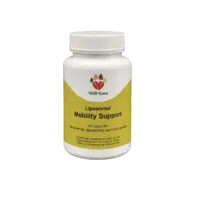
Liposomal mobility support
€ 54,95 Add to cart

Reviews
There are no reviews yet.