


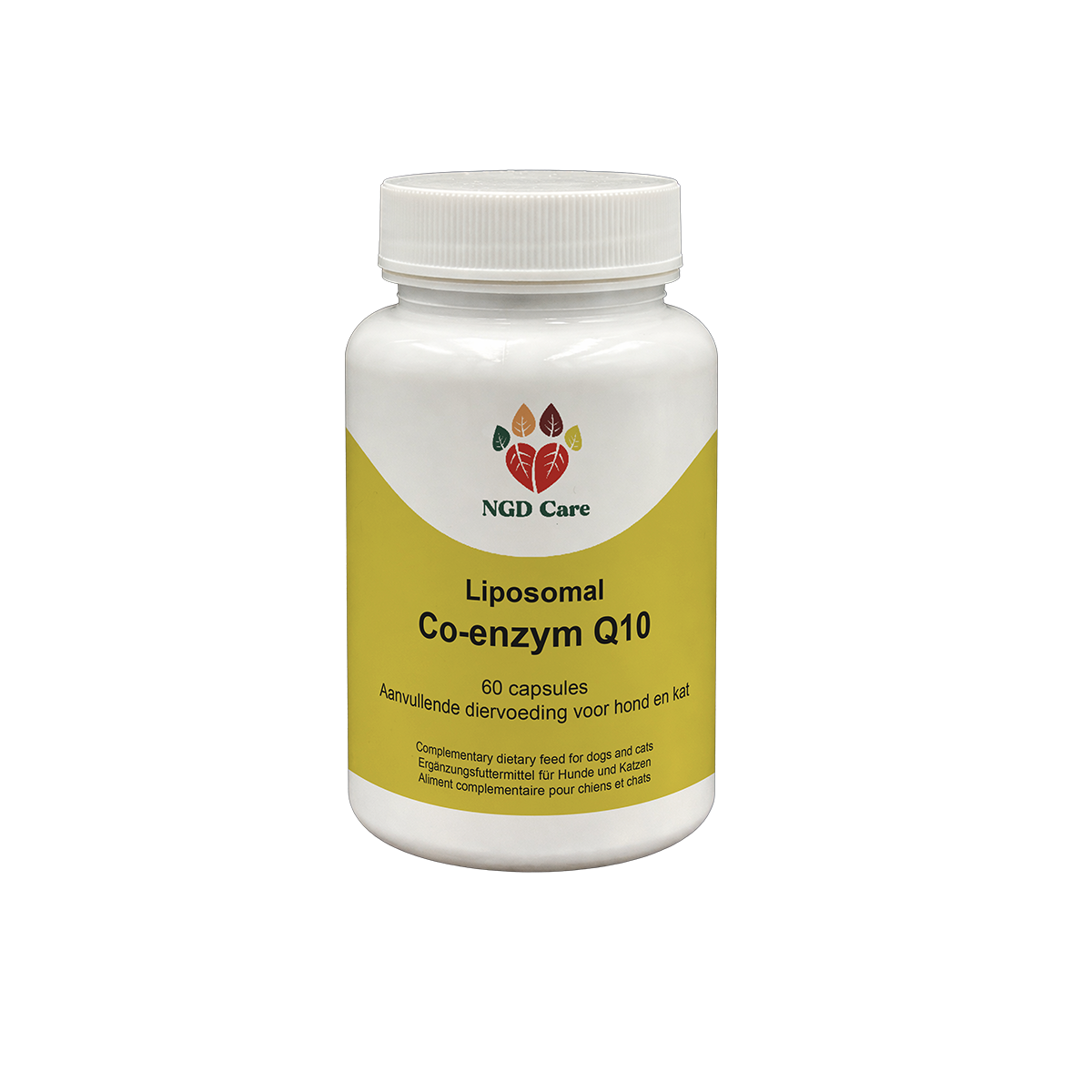
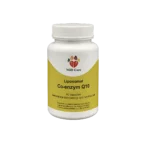
Liposomal Coenzyme Q10
€ 44,95
Do you notice that your dog or cat has less energy, is tired more quickly or is getting older? CoQ10 supports energy production in every cell of the body. Suitable for animals that could use some extra fuel: for fatigue, heart support or just to stay vital.
- Liposomal form of CoQ10: high and stable absorption in mitochondria
- Helps in recovery of heart and muscle function
- Supports neurological health
- Synergistic with NAD, omega-3 and mushroom mixes
Description
QUICK SUMMARY
This supplement helps with: fatigue, reduced vitality, heart support and aging in dogs and cats. Especially relevant for senior animals and animals recovering from illness.
How does Liposomal Coenzyme Q10 work?
Coenzyme Q10 is the substance that every cell in your body needs to make energy. It is found in the mitochondria, the power plants of the cell, and is indispensable for the functioning of the heart, muscles and immune system. Without enough CoQ10, cells become exhausted.
From a certain age, the body produces less CoQ10. In dogs, this starts around three to four years of age. In animals that take medication such as certain heart medications, production can decrease even further. Supplementation helps the body maintain its own energy production.
The liposomal form protects CoQ10 from breakdown in the stomach and ensures significantly better absorption into the cells. Regular CoQ10 supplements are only absorbed in a small amount. This is the difference you notice.
What does this supplement do?
- Supports energy production in cells, muscles and the heart
- Helps with fatigue and reduced vitality
- Protects cells from aging and oxidative damage
- Extra relevant for heart problems and for senior animals
- More absorbable than regular CoQ10 supplements due to liposomal form
When do you see results?
CoQ10 works at the mitochondrial level: the power plants of cells must first be replenished before the effect becomes visible. From a systems biology point of view, this is a fundamental recovery route that takes time but also has a lasting effect.
CoQ10 is absorbed and begins to build up in mitochondria. No visible effect yet, but the process has started.
First signs: a little more energy, less tired after exertion. Heart patients sometimes have less shortness of breath.
Significantly more vitality and stamina. Better heart function in heart patients. More desire to play with younger animals.
Daily use supports long-term mitochondrial health. In senior animals and heart patients, this is a maintenance supplement.
Don’t see any difference after 8 weeks? Contact us via our app or email, or schedule an intake with integrative veterinarian Stefan Veenstra.
Frequently Asked Questions (FAQ)
How fast does Liposomal Coenzyme Q10 work?
The first signs are usually visible from weeks 3 to 6: a little more energy and less tired after exercise. In heart patients, shortness of breath sometimes decreases during this period. The full effect on vitality and heart function usually takes 2 to 3 months.
Why liposomal CoQ10 instead of a regular supplement?
Common CoQ10 supplements are poorly absorbed because the molecule is large and fat-soluble. The liposomal form packs CoQ10 in a protective layer that prevents breakdown in the stomach and significantly increases its absorption into the cells.
For which dogs and cats is CoQ10 extra important?
Especially for senior animals, animals recovering from illness and animals with heart problems, because the body’s own production of CoQ10 decreases with age and certain heart medications can further reduce this production.
What is the difference between ubiquinone and ubiquinol?
Ubiquinone is the oxidized, stable form of CoQ10. Ubiquinol is the reduced form that is active in the body as an antioxidant; The body converts ubiquinone into ubiquinol itself when needed. Ubiquinol is known to be more absorbable, but it is also more chemically unstable and sensitive to oxidation. Liposomal technology already overcomes this absorption disadvantage of ubiquinone, while maintaining the stability of ubiquinone — hence the choice of liposomal ubiquinone.
Why NGD Care Liposomal Coenzyme Q10?
| Characteristic | NGD Care | Medium supplement |
|---|---|---|
| Recording | Liposomal formulation: significantly higher absorption | Standard capsule or tablet: low absorption |
| Form of | Capsule with only active ingredients | Tablet, chew or powder: often 40-70% fillers |
| Scientifically substantiated | ✅ Yes — peer-reviewed literature including veterinary studies | Variable |
| Human Grade quality | ✅ | Often not |
| Clean & Green Label | ✅ Free from flavors, fragrances and animal by-products 🔴 Fillers: in transition to fully Clean & Green Label |
Rare |
| Part of systemic protocol | ✅ Yes — Aging Protocol and Bowel Protocol Phase 3 | ❌ Individual supplements |
| Developed by veterinarian | ✅ Stefan Veenstra DVM | Rarely |
| Personal guidance | ✅ Intake possible via Naturally Healthy Animals | ❌ Not available |
Comparison based on common CoQ10 supplements for dogs and cats on the Dutch market.
Part of a protocol
Liposomal Ubiquinone is a core component of the Aging Protocol and Phase 3 of the Bowel Protocol.
Works well with
CoQ10 supports the mitochondrial energy chain. The supplements below enhance this effect through additional pathways.
The dibenzo-alpha-pyrones (DBPs) in shilajit stabilize CoQ10 and promote reuptake in the mitochondrial chain. This is one of the best-researched supplement combinations in mitochondrial medicine.
NAD+ activates sirgardens that stimulate mitochondrial biogenesis. CoQ10 is the fuel that is then used more efficiently. Together the most complete mitochondrial support for aging.
Glutathione protects mitochondria from oxidative damage. CoQ10 keeps energy production going in those mitochondria. Together, they protect and support the cellular power plants at the same time.
Curcumin inhibits NF-kB and the chronic inflammation that damages mitochondria. CoQ10 restores energy production in those mitochondria. Addressing both cause and effect of mitochondrial dysfunction.
Want to know more about the science behind this supplement?
Stefan Veenstra DVM explains how CoQ10 supports mitochondria and why the liposomal form makes all the difference.
Developed and clinically substantiated by Stefan Veenstra DVM, integrative veterinarian. Stefan is the founder of NGD Care, NGD Care Academy and Integrative Veterinary Center Natural Healthy Animals. Read more about Stefan →
This information is educational in nature and does not replace a veterinary consultation. In case of severe or persistent complaints, always consult a veterinarian.
Ingredients
- Ingredients
- Ubiquinone
- Composition per capsule
- 80 mg Ubiquinone
- Additions:
- Lipodry liposome: sunflower lecithin
- Maltrodextrin, HPMC vega capsule
Dosage and use
- Dosage dog and cat
- Therapeutic dosage
- on the advice of a veterinarian or therapist
- <10kg 2xdaily 1/2 capsule
- 10-30kg 1 capsule 2xdaily
- >30kg 2x daily 2 capsules
- Maintenance Dosing
- <10kg 1x daily 1/2 capsule
- 10-30kg 1x daily 1 capsule
- >30kg 2 capsules 1x day
- Therapeutic dosage
- Manual
- Capsules can be administered opened or whole through food.
- Store in a dry, sealed and room temperature.
- Contraindications
- No absolute contraindications
- Side effects
- slight nausea on an empty stomach
- insomnia when taken in the evening
- Interactions
- No known negative interactions in animals
Disclaimer
- This product is a dietary supplement and not a substitute for a healthy lifestyle and varied balanced diet.
- The products are not medicines and cannot be used as medicines, but as a dietary supplement. In case of illness or other medical condition, always consult a veterinarian before use.
- Dietary supplements may have interactions and side effects with regular medications.
- Keep out of reach of young children.
- Consult an expert before using supplements in case of pregnancy, lactation, medication use and illness.
Reviews
There are no reviews yet.