


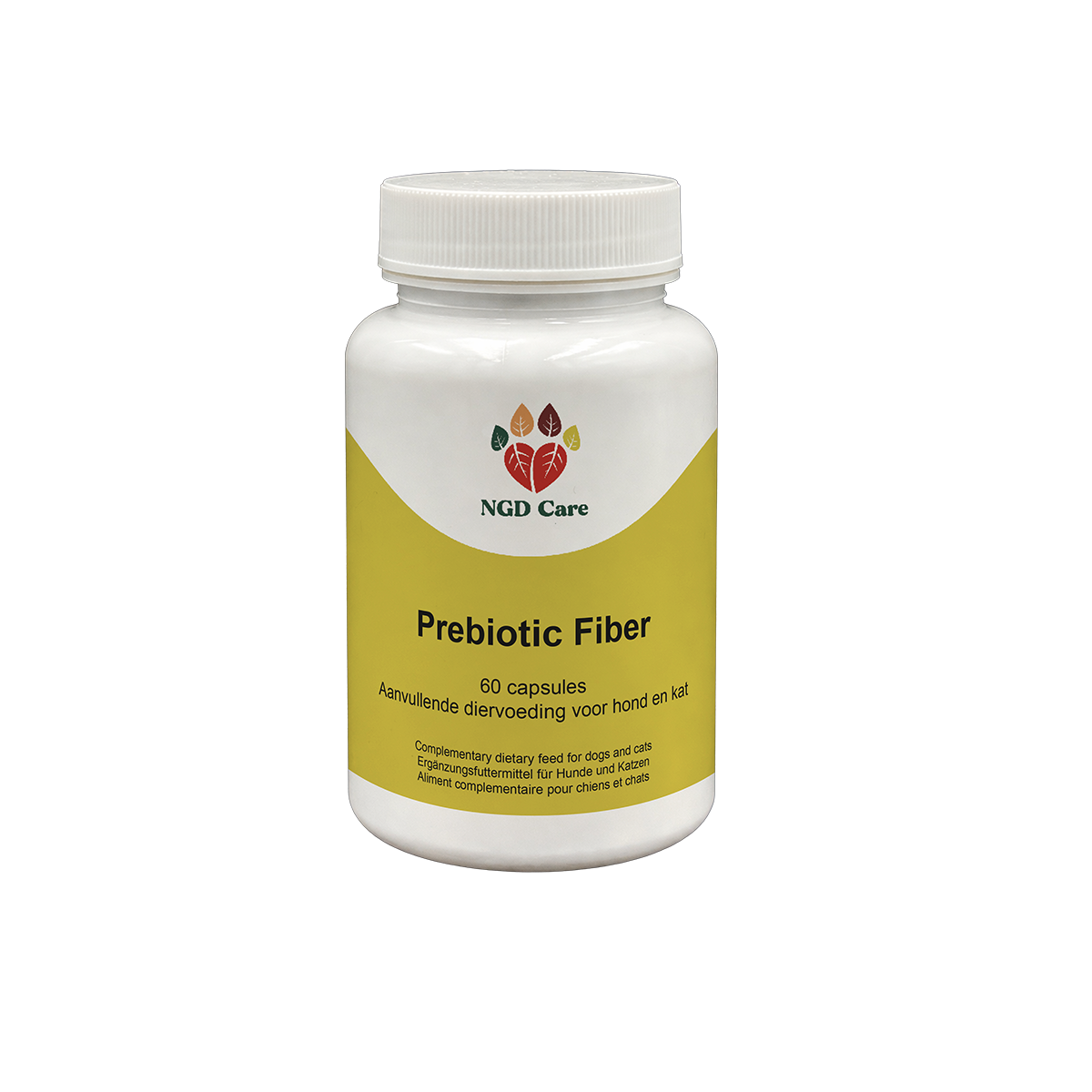
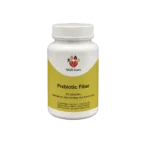
Prebiotic fiber
€ 44,95
A healthy gut starts with good nutrition for the gut bacteria. Prebiotic Fibers (formerly prebiotics) contains five types of fiber that feed a wide range of good bacteria. Useful after antibiotics, deworming or with a bowel that could use some extra support.
- Stimulates growth of beneficial gut bacteria
- Supports digestion, gut health and immune system
- Rich in natural fibers and bioactive substances
- Ideal for diarrhea, disruption of the microbiome or recovery after medication
- Suitable for long-term use in dogs and cats
- Description
- Ingredients
- Dosage and use
- Disclaimer
- Scientific literature & substantiation
- Reviews (0)
Description
QUICK SUMMARY
This supplement helps with: the recovery of the intestinal flora after antibiotics or deworming, a restless bowel, fluctuating stools and as daily support for a healthy microbiome.
How does Prebiotic Fibers work?
Prebiotics Fibers is the new name of prebiotics.
Prebiotics are fermentable fibers that serve as food for the beneficial bacteria already present in the gut. Unlike probiotics, which add live bacteria, prebiotics stimulate the growth of the existing microbiome. The more varied the prebiotic supply, the more different bacterial strains are fed and the more robust the microbiome that emerges.
Prebiotic Fibers contains five carefully selected prebiotic groups. Inulin and FOS (fructooligosaccharides) from chicory root primarily stimulate Bifidobacterium and Lactobacillus and are the best-researched prebiotic fibers for microbiome building. Acacia fiber arabinogalactans feed a broader spectrum of bacteria including butyrate-producing species, which are essential for the intestinal barrier and local immune system. MOS (mannan-oligosaccharides) from Saccharomyces boulardii have a direct antimicrobial effect by binding to pathogenic bacteria and blocking their adhesion to the intestinal wall, while at the same time selectively stimulating beneficial bacteria. Beta-glucans from the mushroom Agaricus blazei are polysaccharides with both prebiotic and immune-modulating properties via activation of macrophages and natural killer cells.
Butyrate, the short-chain fatty acid produced during fermentation of these fibers, is the primary source of energy for colonocytes and a direct modulator of tight junction expression and intestinal immune function. A microbiome that produces enough butyrate has a stronger gut barrier, less systemic inflammation, and a better response to dietary antigens. Prebiotic Fibers is particularly suitable after antibiotics or deworming and as part of the Intestinal Protocol and Giardia Protocol.
What does this supplement do?
- Five prebiotic groups for the broadest possible microbiome spectrum
- Helps restore the microbiome after antibiotics or deworming
- MOS actively blocks the adhesion of pathogenic bacteria to the intestinal wall
- Beta-glucans from Agaricus blazei for prebiotic and immune-modulating effect
- Stimulates butyrate production for stronger intestinal barrier and less inflammation
When do you see results?
Prebiotics work by gradually shifting the microbiome to a healthier composition. From a systems biology perspective, the microbiome is a complex ecosystem that needs time to recover. Good bacteria grow slowly, pathogens are displaced step by step.
Fiber starts to feed the good bacteria. Sometimes slight flatulence at first that disappears on its own as the intestine gets used to it.
Firmer and more regular stools. Fewer abdominal complaints. Onset of microbiome repair visible in stool quality.
Significantly more stable intestinal behavior. Better overall condition and coat. Less susceptible to infections due to better functioning immune system.
Daily use maintains a diverse and resilient microbiome. For chronic intestinal complaints, this is a long-term maintenance supplement.
Don’t see any difference after 6 weeks? Contact us via our app or email, or schedule an intake with integrative veterinarian Stefan Veenstra.
Frequently Asked Questions (FAQ)
How fast does Prebiotic Fibers work?
The fiber immediately starts feeding the good bacteria, but visible change in stool and bowel behavior usually occurs from weeks 2 to 4. Building a diverse and resilient microbiome is a gradual process of 1 to 2 months.
Can I give Prebiotic Fibers after a course of antibiotics?
Yes, this is one of the most important applications. Antibiotics disrupt the microbiome broadly, and the five prebiotic fiber groups in this supplement specifically feed the good bacteria that then have to rebuild.
What is the difference between prebiotics, probiotics and postbiotics?
Probiotics are live bacteria that are added to the gut. Prebiotics do not add bacteria, but feed the bacteria that are already present in the intestine. Postbiotics are the substances that are created when bacteria ferment fibers, such as butyrate: they work immediately, without the need for live bacteria. Prebiotic Fibers works according to the prebiotic principle: it nourishes the existing microbiome, whereby the fermentation of the fibers automatically also produces postbiotics such as butyrate.
Can my dog or cat get gassy from Prebiotic Fibers?
Slight, temporary flatulence in the first few days occurs because the intestinal bacteria have to get used to the fiber. This normally goes away on its own within 1 to 2 weeks as the microbiome adjusts.
Why NGD Care Prebiotic Fibers?
| Characteristic | NGD Care | Medium supplement |
|---|---|---|
| Fiber spectrum | Five prebiotic groups: inulin, FOS, arabinogalactans, MOS and beta-glucans | Often one type of fiber, narrow spectrum |
| Form of | Capsule with only active ingredients | Powder or tablet: often with flavorings |
| Unique synergistic formulation | ✅ Yes — MOS blocks pathogens, beta-glucans modulate immune system | ❌ Often single |
| Scientifically substantiated | ✅ | Variable |
| Human Grade quality | ✅ | Often not |
| Clean & Green Label | ✅ Free from synthetic fillers, flavourings and fragrances, as well as animal by-products | Rarely |
| Part of systemic protocol | ✅ Yes — phase 1 Intestinal Protocol and Giardia Protocol | ❌ Individual supplements |
| Developed by veterinarian | ✅ Stefan Veenstra DVM | Rarely |
| Personal guidance | ✅ Intake possible via Naturally Healthy Animals | ❌ Not available |
Comparison based on common prebiotic supplements for dogs and cats on the Dutch market.
Part of a protocol
Prebiotic Fibers is a phase 1 component of the Gut Protocol and the Giardia Protocol for microbiome building.
Works well with
Prebiotic Fibers feeds the good bacteria. The supplements below provide the right environment and protection.
Glutamine restores the intestinal wall so that good bacteria have a healthy surface to grow on. Prebiotic Fibers feeds those bacteria. Together structure and nutrition for the microbiome.
Lactoferrin inhibits harmful bacteria so that good bacteria get space. Prebiotic Fibers feeds those good bacteria afterwards. Together the strongest recovery effect after infections or antibiotics.
Fulvic acid in Gut Barrier Support stimulates Akkermansia muciniphila, the key bacterium for the mucus layer. Prebiotic Fibers nourishes the broader microbiome community. Together for complete microbiome and barrier repair.
Curcumin directly modulates the gut microbiome through selective inhibition of pathogenic species and stimulation of Lactobacillus. Together with Prebiotic Fibers for a faster shift to a healthier microbiome composition.
Want to know more about the science behind this supplement?
Stefan Veenstra DVM explains how prebiotics work and why five fibers are better than one.
Developed and clinically substantiated by Stefan Veenstra DVM, integrative veterinarian. Stefan is the founder of NGD Care, NGD Care Academy and Integrative Veterinary Center Natural Healthy Animals. Read more about Stefan →
This information is educational in nature and does not replace a veterinary consultation. In case of severe or persistent complaints, always consult a veterinarian.
Ingredients
- Ingredients
- Chicory root, acacia root, Agaricus Blazei, Saccharomyces Boulardii
- Composition per capsule of 433mg
- 217mg Chicory root
- 130mg Acacia Root
- 43mg Agaricus Blazei
- 43mg Sacharomyces Boulardii
- Additions
- HPMC enteric-coated vega capsule
Dosage and use
- Dosage dog and cat
- Therapeutic dosage
- For a maximum of 6-8 weeks on the advice of a veterinarian or therapist
- <10kg 1x daily 1 capsule
- 10-30kg 1 capsule 2xdaily
- >30kg 2x daily 2 capsules
- Maintenance Dosing
- <10kg 1 capsule every other day
- 10-30kg 1x daily 1 capsule
- >30kg 2 capsules 1x day
- Therapeutic dosage
- Manual
- Give capsule whole in the food or loose from the food in the mouth.
- Store in a dry, sealed and room temperature store
- Contraindications
- none known
- Side effects
- Temporary bloating or flatulence possible. If that happens start the dosage more slowly.
- Change in stool pattern in the first days
- Interactions
- May affect the action of blood thinners
- May lower blood sugar levels in animals with diabetes
Disclaimer
- This product is a dietary supplement and not a substitute for a healthy lifestyle and varied balanced diet.
- The products are not medicines and cannot be used as medicines, but as a dietary supplement. In case of illness or other medical condition, always consult a veterinarian before use.
- Dietary supplements may have interactions and side effects with regular medications.
- Keep out of reach of young children.
- Consult an expert before using supplements in case of pregnancy, lactation, medication use and illness.
Scientific literature & substantiation
- Effect of prebiotics on the intestinal flora
- Inulin and FOS increase the population of bifidobacteria and improve microbial balance.
- Source: Slavin, J. (2013). Fiber and prebiotics: mechanisms and health benefits. Nutrients.
- Arabinogalactans and immune function
- Acacia fiber contains arabinogalactans that stimulate both the microbiome and immune response.
- Source: D’Adamo, P. J., & Kelly, G. S. (2001). Glycoproteins in innate immunity. Alternative Medicine Review
- MOS from Saccharomyces boulardii
- MOS can bind and excrete pathogenic bacteria, as well as improve gut health.
- Source: Spring, P., et al. (2000). Mannan-oligosaccharides in animal nutrition. Proceedings of the 61st Minnesota Nutrition Conference.
- Beta-glucans from Agaricus blazei
- Beta-glucans stimulate macrophages and NK cells and support gut immunity.
- Source: Hetland, G., et al. (2008). The mushroom Agaricus blazei Murill in immunotherapy. Current Topics in Nutraceutical Research.
- Prebiotics after antibiotics and medication
- Prebiotic fibers help restore the intestinal flora after the use of antibiotics, pesticides or dewormers.
- Source: Gibson, G. R., & Roberfroid, M. B. (1995). Dietary modulation of the human colonic microbiota: introducing the concept of prebiotics. Journal of Nutrition
You may also like…

Related products
-

Ozone Glycerin Skin Gel – Skin Gel
From € 34,95 Select options This product has multiple variants. The options may be chosen on the product page -

Ozone Glycerin Nasal Drops – Nasal Spray
€ 21,95 Read more -

Digestive enzymes
€ 42,95 Add to cart -

Colloidal silver-zinc spray – colloidal silver zinc spray
€ 23,95 Add to cart
Reviews
There are no reviews yet.